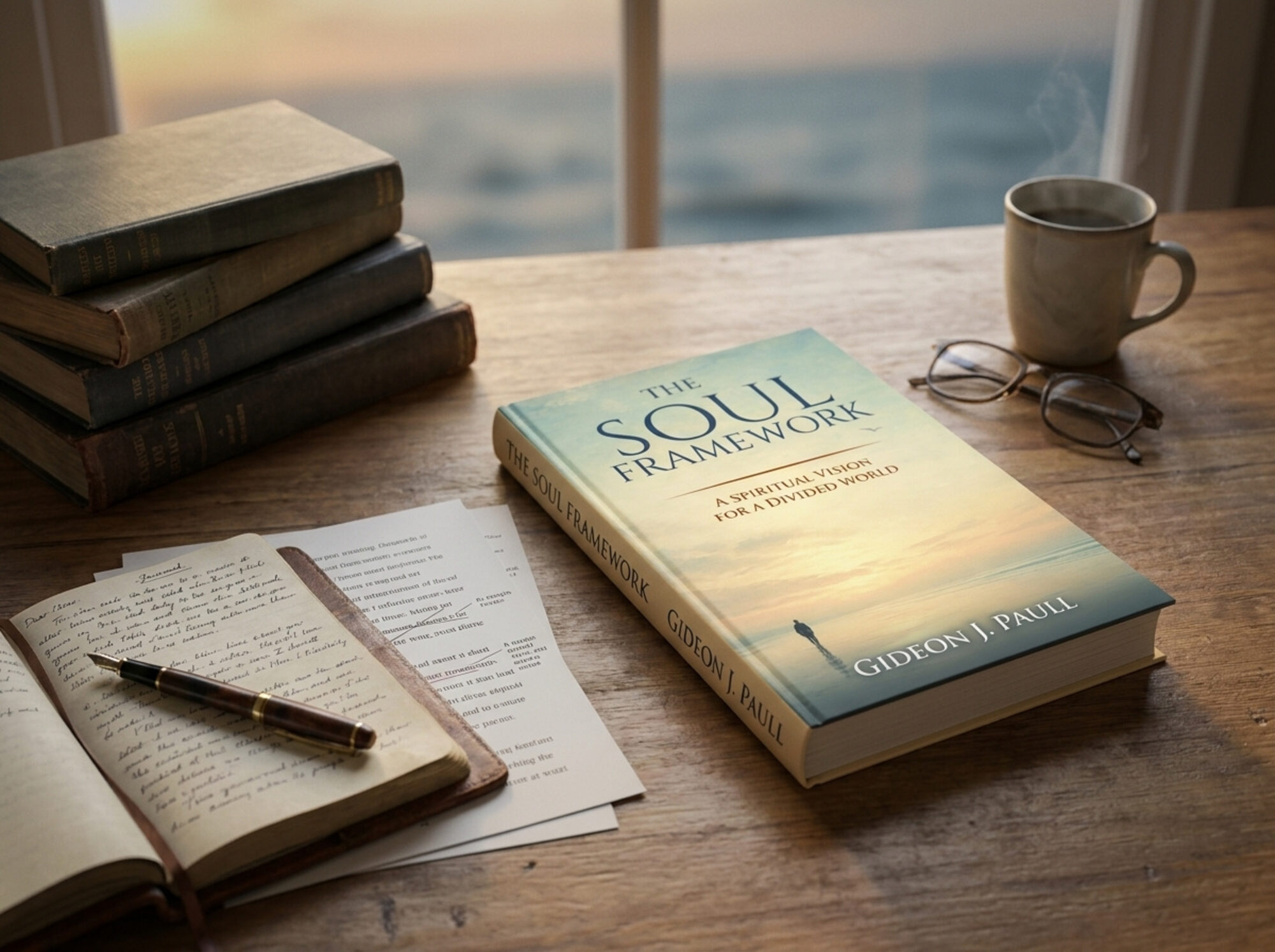
The Architecture of the Soul
What we are made of — the mortal animalistic soul, the immortal spiritual soul, and the spirit that binds them. The inner war and the cultivation of balance.
About the Book
How can the same human heart hold immense love and murderous hatred within the same hour? Why does love persist across barriers no rational analysis can explain? Why do so many of us feel closer to the divine in a quiet moment with a stranger than in a lifetime of institutional worship?
The Soul Framework proposes an answer that begins not with theology but with the soul itself — the living entity inside every human that all religion was designed to serve. Drawing on the Hebrew Bible and Rabbinic commentary, the New Testament, the Quran, Kabbalah and Sufi mysticism, Greek philosophy, and modern psychology, it maps a structure the traditions have quietly converged on for three thousand years: within each person lives not one soul but two — a mortal animalistic soul oriented toward survival and self, and an immortal spiritual soul oriented toward the divine — bound together by the spirit, a fragment of God’s own breath.
Being human is the lifelong negotiation between these forces — the architecture beneath every choice between greed and generosity, hatred and love, the small self and something larger. It is why we are capable of cruelty no animal commits and grace no calculation explains.
This is not a book against religion. At its best, religion is humanity’s most powerful technology for cultivating the soul. But when the vessel is mistaken for what it carries — when the map becomes the territory — the soul is caged by the institutions built to free it. This book offers a way back — and a practical guide for walking it.
How is it with your soul?
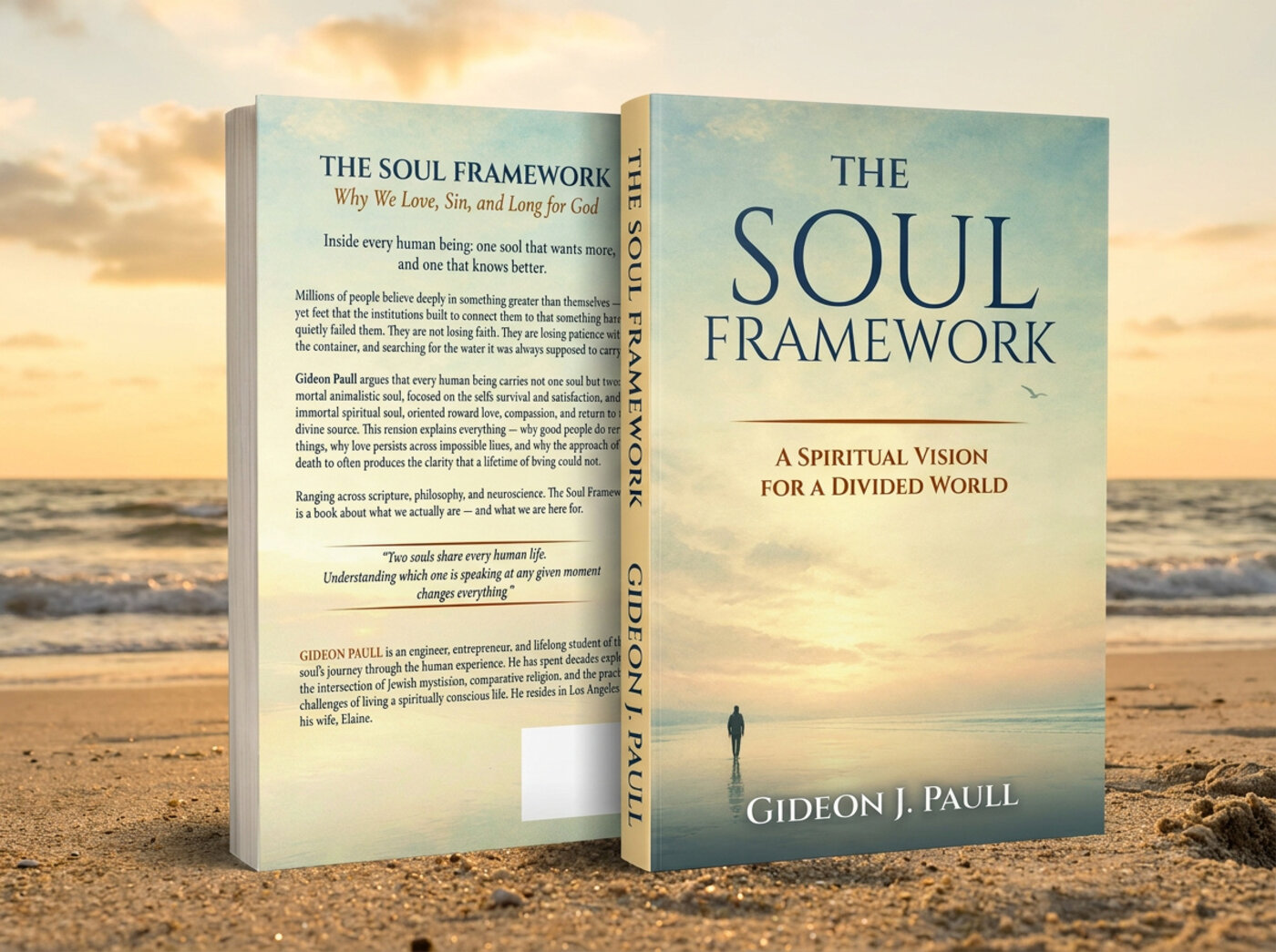
A Field Guide to the Inner Life
Understanding which one is speaking at any given moment changes everything. From birth through love, evil, and death, back to the divine that breathed us into being, The Soul Framework ends in the small daily practices through which an ordinary person gives the immortal soul a little more room than yesterday.
From the Book
“You don’t go to a place of worship to find God. God will be found in your heart.”
— Epigraph, Preface
“Two souls share every human life. Understanding which one is speaking at any given moment changes everything.”
— The Soul Framework
“Religion is the map. Spirituality is the territory. This book is how you tell them apart.”
— The Soul Framework
“You were not made of one thing. You were made of two — and learning the difference is the work of a lifetime.”
— The Soul Framework
“The soul has no religion. It has only a destination — and a journey it cannot make alone.”
— The Soul Framework
“Inside every human being live two souls — and the war between them is the story of your life.”
— The Soul Framework
Inside the Book
What we are made of — the mortal animalistic soul, the immortal spiritual soul, and the spirit that binds them. The inner war and the cultivation of balance.
From Eden to the origins of good and evil; from the religious soul to the question of whether God belongs to any religion at all.
Greed and power. Soul mates and recognition. Interfaith love across tribal lines. Divine synchronicity and the puzzle of free will.
Death as the soul’s liberation. What God actually cares about. Transcending religion to find spirituality — and the daily practice of a spiritual life.
Frequently Asked
The Soul Framework argues that every human being carries not one soul but two — a mortal animalistic soul oriented toward survival and self, and an immortal spiritual soul oriented toward the divine — bound together by the spirit, a fragment of God’s own breath. Drawing on the Hebrew Bible, the New Testament, the Quran, Kabbalah, Sufi mysticism, Greek philosophy, and modern psychology, it explains why we love, sin, and long for God.
It is written for people who consider themselves spiritual but not religious — those who believe deeply in something greater than themselves yet feel institutional religion has not connected them to it. It is also for thoughtful readers of any (or no) tradition who want a unifying framework for the inner life that respects scripture, philosophy, and science alike.
No. At its best, religion is humanity’s most powerful technology for cultivating the soul. The book is critical of moments when religious institutions mistake the vessel for what it carries — when the map becomes the territory — but it treats the great traditions with deep respect and draws extensively from them.
The Hebrew Bible and Rabbinic commentary, the New Testament, the Quran, Kabbalah and Sufi mysticism, Greek philosophy (notably Plato), Christian mystics such as Teresa of Ávila and Simone Weil, and modern psychology and neuroscience.
Sixteen chapters across four parts: I. The Architecture of the Soul · II. The Soul Through Sacred History · III. The Soul in Human Experience · IV. The Soul’s Destination. It closes with a chapter of daily, weekly, and periodic practices for cultivating the spiritual soul.
The Soul Framework is available now on Amazon in both editions. Get the Kindle edition here. Get the paperback here. The buttons above will route you to your local Amazon marketplace automatically.
Gideon J. Paull is an engineer, entrepreneur, and lifelong student of the soul’s journey through the human experience. He has spent decades exploring the intersection of Jewish mysticism, comparative religion, and the practical challenges of living a spiritually conscious life. He lives in Los Angeles with his wife, Elaine.
Out Now
The Soul Framework is available now in Kindle and paperback on Amazon worldwide.


Also By Gideon Paull
For forty-two days, Céline Bernard has been talking to a man who cannot answer.
The man in the hospital bed is her husband. A single gunshot at a medical conference put him there, somewhere beyond reach, and the doctors have begun to use the careful language of people who are running out of other things to say. So, Céline does the only thing left to her. She sits beside him, through the nights, and she tells him their story — all of it, from the beginning — because she has forty-two nights and twenty years of things she should have said.
She married Simon Walker when she was twenty-one: a man who had built himself back from almost nothing, with a prosthetic leg and a future he didn’t yet believe in. She was the heir to a pharmaceutical empire, raised to run a company she had never been first in line to inherit. She had already learned, by then, what it costs to lose someone across a distance that cannot be closed.
She thought she had built a life solid enough that it would never happen again.
Instead, she and Simon built two lives — extraordinary, and separate. He became the scientist she had seen in him, his cancer research consuming him as completely as the company consumed her. The distance between them came on slowly: a missed call, a canceled visit, the silence of two people who each kept meaning to find their way back and each assumed there would be time.
What do you tell a man who cannot hear you?
Everything you should have told him when he could.
The Held Breath is a novel about what happens when two people build extraordinary lives and forget to build them together — and about whether love, told honestly and nearly too late, is enough to close the distance.
Learn More About The Held Breath
Survival taught her to keep everyone out. Love would ask the opposite.
Christine Holloway crosses a continent alone — fifteen years old, eighty-nine pounds, fresh off the kind of hell only the road can deliver. She survives the streets of Los Angeles because one human being chooses, in one moment, to do something. Three decades later, she has built a successful development firm — and walls no one has ever been allowed past.
Thirty years. One woman. The cost of learning to trust.
Holloway is a sweeping novel about the difference between surviving and living — and the single person, at exactly the right moment, who makes the second one possible.
Learn More About Holloway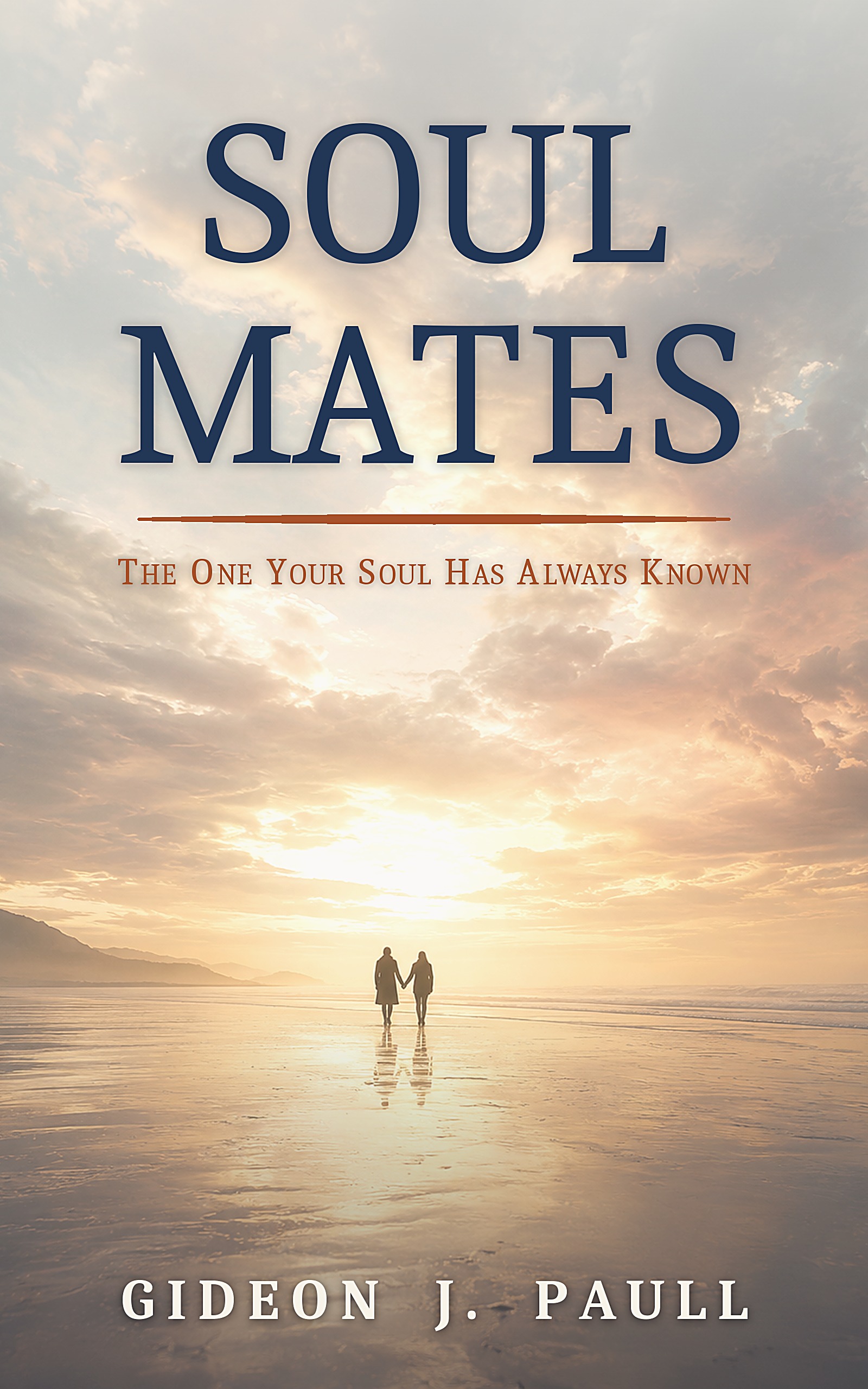
The One Your Soul Has Always Known.
You have felt it — a moment when something in you recognized something in another. Not attraction. Not familiarity. Something older, that arrived before the introduction had finished. Drawing on Kabbalistic, Platonic, Sufi, and Hindu traditions, Soul Mates explores the soul mate not as a romantic ideal, but as a spiritual fact.
Not how to find your soul mate — but how to become the person who can recognize them.
Some loves are not built. They are recognized — in a single moment, with a certainty no subsequent evidence has ever quite explained.
Learn More About Soul Mates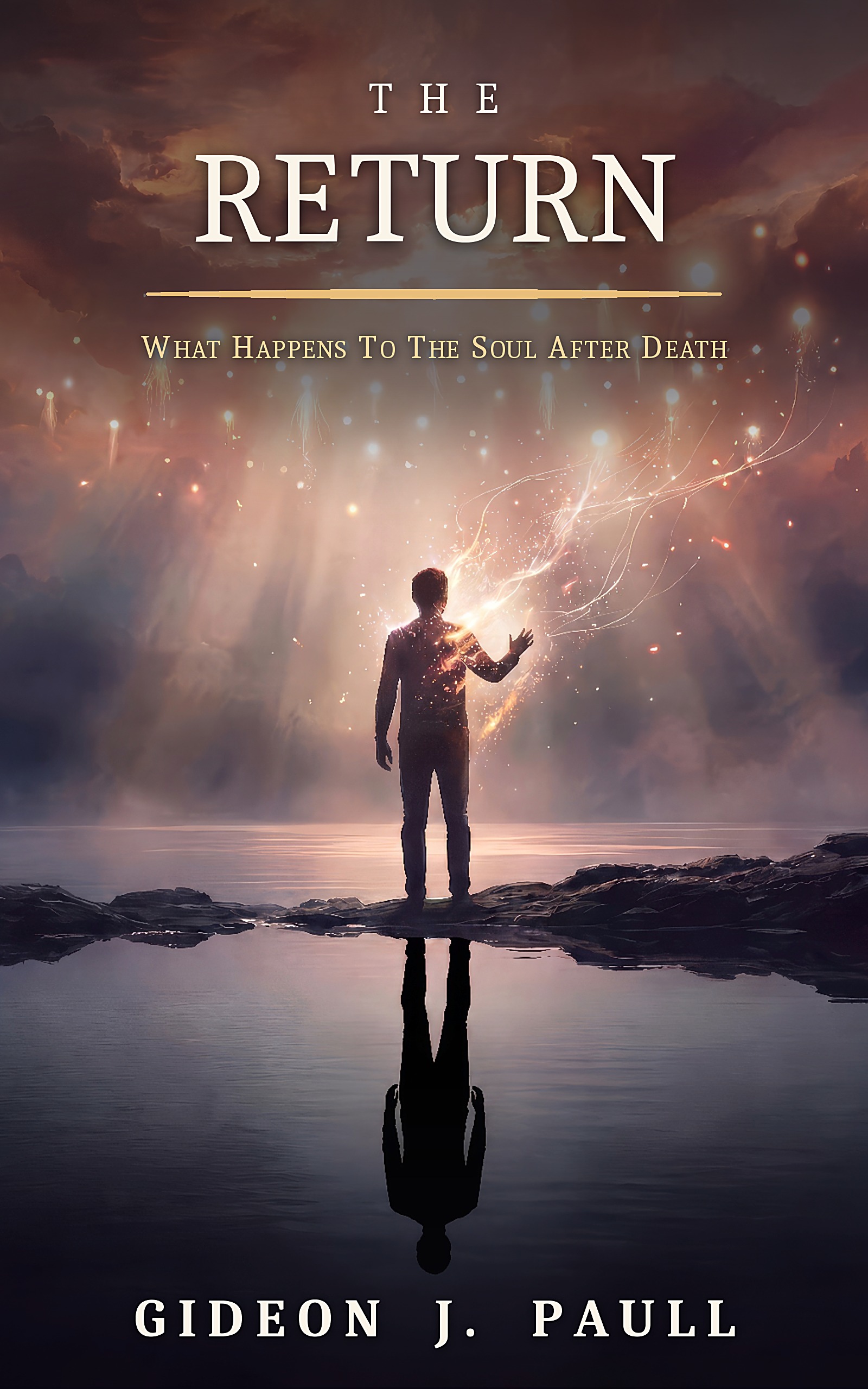
You are carrying two souls. Only one of them is going anywhere.
One soul is mortal, bound to the body and built for its survival. The other is immortal, on loan from elsewhere and always, quietly, trying to return home. When the body ends, the first ends with it. The second goes on — and it does not leave empty-handed. It carries everything you made of it.
The Return follows that second soul past the threshold — drawing together the Kabbalah’s map of the soul’s ascent, the Tibetan, Egyptian, and Islamic accounts, Plato and the mystics, and the modern clinical evidence of near-death experience — and reframes death not as an ending but as a homecoming.
What death strips away was never you. What it cannot touch, you are shaping right now.
The third book of The Soul Framework series — a clear-eyed and strangely hopeful account of what death is, and of why how we live matters more than we have ever let ourselves believe.
Learn More About The ReturnGet in Touch
Questions, reflections, or speaking inquiries — we’d love to hear from you.